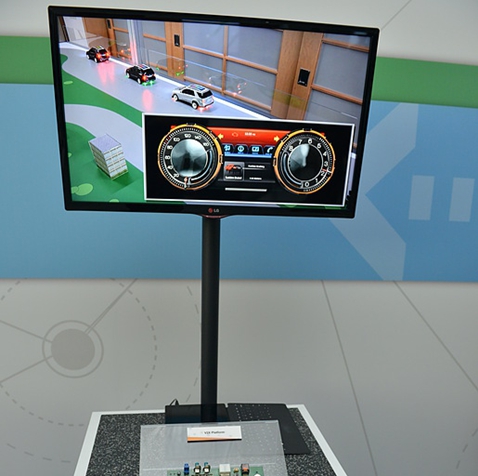
偉世通公司的V2V(車車通信)開發(fā)模塊幫助工程師解決安全等難題�。
最近美國國家公路交通安全管理局(NHTSA)批準了車車通信(V2V)/車路通信對基礎設施(V2I) (簡稱V2X)通訊技術研究之后,主流媒體就開始大肆宣傳���。但是他們沒有注意到,在V2X真正起作用之前還需要克服很多技術性的困難���。
美國國家公路交通安全管理局并沒有給整車廠是否決定把V2X應用到車輛上設立任何時間表����。其中一個需要克服的技術難題就是安全問題,正因如此何時應用這項技術一直沒有定論�����。另一個擺在面前的難題就是要有足夠多車輛運用該技術才能看到它真正的優(yōu)勢�����,同時對云端技術也存在一定的挑戰(zhàn)�����。
大多數(shù)整車廠和一級供應商都將它作為一項遠期技術正在持續(xù)觀望中��。而他們卻都在開發(fā)自動駕駛技術����,并把V2X作為“第二個傳感器”�,相較于車載傳感器,V2X能幫助控制系統(tǒng)掌握更多的路況信息�。比如前方不在視野內(nèi)的大型卡車進行了緊急剎車,能夠及時提醒駕駛員/控制系統(tǒng)作出反映�����。不過,V2X與任何形式自動化相結合都還為時尚早���。
“我們需要V2X來實現(xiàn)自動駕駛嗎����?不需要��。”博世集團底盤系統(tǒng)控制事業(yè)部的自動化駕駛區(qū)域業(yè)務經(jīng)理Kay Stepper談到�,“那它有用嗎?有��。一旦等到V2X成熟�����,我們當然會用���。但是真正應用這一技術我們還需要花上很長時間�����。”
當政府部門在糾結展示時機的問題時�����,各公司已經(jīng)在持續(xù)探索使用手機蜂窩網(wǎng)絡連接���,獲取數(shù)據(jù)帶來的好處��,它能大致模仿V2X中專用短程通信(DSRC)技術����。
沃爾沃汽車公司的高級技術主管Erik Coelingh說:“V2X確實是另一種傳感器��,但是我還是認為使用手機蜂窩網(wǎng)絡��、3G還有4G所獲得的信息要比DSRC豐富��。如果出現(xiàn)繞行或者車道關閉的情況�,GPS就沒有用了����。這個時候就需要去云端查看實時路況信息。”
其他人則認為手機網(wǎng)絡連接也許只是一種過渡技術�,將最終與DSRC各承擔不同相應的分工。
大陸汽車北美部內(nèi)部電子解決方案主管Tejas Desai說:“V2X的一個基礎就是車輛到云端數(shù)據(jù)的交流以及云端數(shù)據(jù)的匿名集合����。這使得我們可以逐步分步驟的建立這個系統(tǒng)�,在實現(xiàn)安全性和其他任何自動功能之前不需要建成全套基建設施���。”
V2X的一大障礙就是如何向全套基礎設施過渡���,如果提供DSRC連接的汽車數(shù)量達不到一定比例,就很難收回安裝信號收發(fā)器的成本����。很多觀察人員都認為,除非是監(jiān)管機構表態(tài)��,否則這項技術終會凋零�����。
QNX軟件系統(tǒng)自動產(chǎn)品營銷高級經(jīng)理Andy Gryc指出:“如果政府不用強制措施�����,那么V2X就不會實現(xiàn)��。如果只能跟自己小圈子里的車隊對話��,誰又會花那個錢在車上裝這種系統(tǒng)呢��?”
意法半導體公司ADAS(高級駕車輔助系統(tǒng))營銷經(jīng)理Paolo Ruffino也同意投資V2X的顧慮,他說:“這項技術面對的主要威脅就是����,沒有能夠吸引基建建商的商業(yè)模式,比如電信業(yè)�,從某種程度上講,也包括道路運營商�。”
使這項技術遲滯不前的另一顧慮就是安全問題。汽車可以應用V2X提供的信息進行安全相關的操作時�����,控制器必須要搞清楚信息是來自真車或者路邊信號臺�,而不是黑客����。
美國天合汽車全球研發(fā)總監(jiān)及安全集成團隊主管Alois Seewald說道:“V2V的安全性極為關鍵。如果要用它獲得安全信息�,那就必須知道數(shù)據(jù)來源有保障。”
一些觀察人員覺得���,第一批V2X系統(tǒng)可以繼續(xù)在上市以后逐步提高其安全性能�,特別是可以先不用于自動化安全操作����,比如剎車����。早期系統(tǒng)可以只用來向駕駛員發(fā)出警報��,駕駛員自己可以判斷警報是否有誤����。不過如果V2X要用于主動安全系統(tǒng),那么就必須擁有極為可靠的安全技術���,而且還能根據(jù)不斷變化的進行升級改進���。
偉世通公司高級發(fā)展與知識產(chǎn)權副總監(jiān)Brian Daugherty說:“如果V2X作為另一種傳感器被集成到汽車的控制系統(tǒng)里,那么安全問題就更需要重視了���。早期設備是否可以應對未來的不斷的升級將是應用的關鍵�,誰也不希望看到它們因為安全協(xié)議的修改而被淘汰掉����。”
零配件市場方面的問題也讓開發(fā)商的意見并不統(tǒng)一。有些開發(fā)商覺得零配件市場體系可以加速這種交流通信的應用并增加其數(shù)量與價值��,而另一些則認為獨立供應商不能做安全相關的技術。
Daugherty認為:“零配件市場體系會大大提高V2X的滲透率曲線����,也會相應地使整個生態(tài)系統(tǒng)相對駕駛員的價值不斷上升。零配件市場體系要為購買者帶來價值���,可以囊括從不帶反饋信息的‘我在這里定位系統(tǒng)’�����,到帶有顯示器以及一系列警告系統(tǒng)的全套V2X系統(tǒng)�。”
有些人認為��,零配件市場體系大概只能用于基礎通信�。汽車制造商也不太可能允許未經(jīng)授權的小盒子連接到車載網(wǎng)絡中�����,擔心這樣會危及安全�����。
Seewald說:“對于是否允許未知物體連接到安全系統(tǒng)上這一問題�,整車廠的保留意見非常強烈���。他們可以向零配件商提供產(chǎn)品,但是卻不太可能接受真正的零配件市場體系�����。零配件供應商還有一個問題就是�,他們很難提供大量產(chǎn)品。”
業(yè)界和監(jiān)管機構糾結著這些那些問題時��,觀察人員又指出�����,為V2X預留出5.9 GHz頻段也許是非常重要的�����。美國聯(lián)邦通信委員會(FCC)正在測試與非汽車小組共享這尚未使用的頻段時所產(chǎn)生的影響及可能性�。這一點可能會影響實時通信的能力,而實時通信對安全是極為重要的 �。
Daugherty指出: “其他產(chǎn)業(yè)都非常希望共享這個專為V2X留出的5.9-GHz頻段。如果不趕快行動����,這種共享頻段的行為就可能會對V2X產(chǎn)生負面影響�。”
作者:Terry Costlow
isteon’s V2V development module helps engineers solve challenges such as security.
Mainstream media outlets heavily touted vehicle-to-vehicle/-infrastructure (referred to as V2X) communications after a recent NHTSA endorsement. Often overlooked are technical challenges that still must be overcome before V2X can make any real impact.
The U.S. NHTSA (National Highway Traffic Safety Administration) hasn’t set any timetable for determining whether or not it will make OEMs put V2X on vehicles. Security is one of the technical hurdles that’s slowing decisions about deployment. Getting enough vehicles on the road to bring any real benefit is another roadblock. There’s also a challenge from the cloud.
Most OEMs and Tier 1s are viewing it as a long-term technology. As they move towards autonomous driving, many developers see V2X as "another sensor" that can help control systems understand what’s going on at distances greater than onboard sensors can provide. It can also alert controllers that an unseen car in front of a large truck has slammed on its brakes. However, the combination of V2X with any form of autonomy won’t happen soon.
“Do we need V2X for autonomous driving? No,” said Kay Stepper, Regional Business Manager for Automated Driving at Robert Bosch Chassis Systems Control Division. “Will it help? Yes. Once V2X is in place, of course we’ll utilize it. But deployment will take a long time.”
While government agencies grapple with the timing of a rollout, companies continue to explore the benefits of using cellular links to collect data that loosely mimics the capabilities of the dedicated short range communications (DSRC) used for V2X.
“V2X is another sensor, but I believe there’s more information available in cellular, 3G, and 4G than you can get with DSRC,” said Erik Coelingh, Senior Technical Leader at Volvo Cars. “If there’s a detour or lane closure, GPS won’t help. You need to go to the cloud to a real-time network.”
Others contend that cellular links may be an interim technology that will eventually share a role with DSRC.
“One stepping stone for V2X is the introduction of vehicle-to-cloud data communication and the anonymous aggregation of this data in the cloud,” said Tejas Desai, Head of Interior Electronic Solutions at Continental Automotive North America. “This will allow for the systems to be built up over time instead of requiring full infrastructure to be in place before realizing benefits to safety or realizing any of the autonomous functionality.”
The transition to a full infrastructure is a major hurdle for V2X. Until a solid percentage of vehicles offer DSRC connectivity, it’s difficult to justify the cost of installing transceivers. Many observers feel the technology will languish unless regulators take a stand.
“Without a government mandate, V2X won’t happen,” said Andy Gryc, Senior Automotive Product Marketing Manager for QNX Software Systems. “Who will spend the money to put the technology into vehicles if they can only talk to your fleet?”
Paolo Ruffino, ADAS Marketing Manager at STMicroelectronics, echoed concerns about investing in a V2X rollout. “The main threat to this technology is the lack of a business model that could lure the infrastructure owners, such as telecom, and to some extent road, operators,” he said.
Security is another concern that’s slowing development. Before cars can used V2X input for safety-related actions, controllers must know that communications came from a real car or roadside beacon, not a hacker.
“Security on V2V is critical,” said Alois Seewald, Global R&D Director and head of TRW’s Safety Integration Team. “If you’re going to use it for safety information, you need to know you’re getting good data.”
Some observers feel that security can be improved after the first rollout of V2X systems, particularly if the inputs aren’t used for automated safety actions such as braking. Early systems will only be used to warn drivers, who can better determine whether they’re getting false alarms. But if V2X becomes part of active safety systems, it will have to have very solid security technologies that can be upgraded as threats change.
“Once V2X is integrated as another sensor into vehicle control systems, security will be even more important,” said Brian Daugherty, Visteon’s Associate Director of Advanced Development and Intellectual Property. “The ability to handle future upgrades will be a key deployment feature; you don’t want the early systems to become obsolete due to security protocol modifications.”
Aftermarkets are yet another issue that divides developers. Some view aftermarket systems as a viable way to speed up deployment and increase the volume and value of these communications. Others don’t feel that independent suppliers can play a role in safety-related technologies.
“Aftermarket systems will dramatically increase the V2X penetration curve and bring a corresponding increase in the value of the entire ecosystem to drivers,” Daugherty said. “Aftermarket systems will need to bring value to the purchaser and could range from ‘here-I-am systems’ with no feedback to full V2X systems with a display and a suite of warning algorithms.”
Others contend that aftermarket systems may be used only for basic communications. Automakers aren’t likely to let unauthorized boxes connect to in-vehicle networks that can impact safety.
“OEMs have strong reservations about letting an unknown entity have access to the safety system,” Seewald said. “OEMs may provide products for the aftermarket, but it’s unlikely that they will accept a true aftermarket system. Another issue for aftermarket suppliers is the difficulty of providing redundancy.”
While the industry and regulators grapple with these and other issues, observers note that it may be important to start using the 5.9-GHz bandwidth set aside for V2X. The U.S. FCC (Federal Communications Commission) is examining the impact of letting non-automotive groups share this currently unused spectrum. That could impact the ability to communicate in real time, which is critical for safety applications.
“There is a strong desire from other industries to share the 5.9-GHz spectrum that has been reserved exclusively for V2X,” Daugherty said. “If action isn’t taken quickly, spectrum sharing may lead to degraded V2X performance.”
Author:Terry Costlow