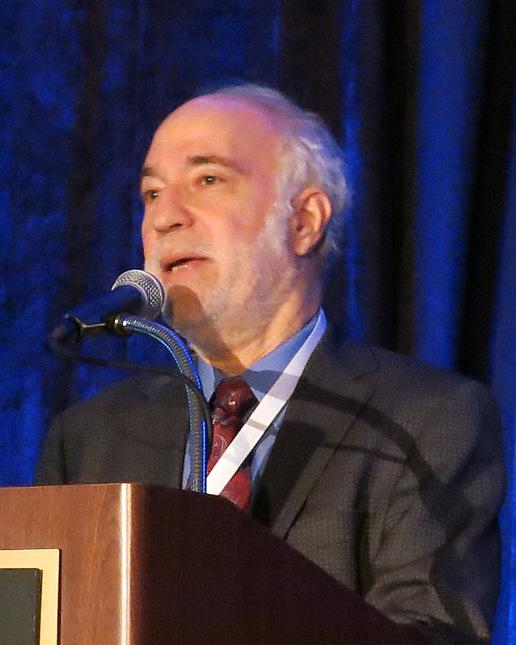
CARB的Daniel Sperling博士在2月11日SAE的技術(shù)研討會(huì)上談道,能否過渡到電動(dòng)汽車其實(shí)還“不確定”�����。(Lindsay Brooke)
于2月11日舉辦的2014年SAE混合動(dòng)力及電動(dòng)車技術(shù)研討會(huì)上����,一位美國(guó)最具權(quán)威的空氣質(zhì)量監(jiān)管組織的成員告訴與會(huì)人員���,美國(guó)汽車燃油經(jīng)濟(jì)性法規(guī)要求到2025年前達(dá)到平均54.5英里每加侖(mpg),這一點(diǎn)已經(jīng)不足以促成零排放電動(dòng)汽車(包括電池電動(dòng)車和燃料電池車)的大規(guī)模投資����。
加州空氣資源委員會(huì)(CARB)成員Daniel Sperling博士為這期三天的技術(shù)研討會(huì)致了開幕辭,同時(shí)他也談道:“我在加州的立法中聽到越來越多關(guān)于碳稅的內(nèi)容����。”他指出,插電式及混合動(dòng)力車的發(fā)展的首要原因已經(jīng)從過去“石油終結(jié)”威脅論��,轉(zhuǎn)變成氣候變化問題��。這一轉(zhuǎn)變不論對(duì)于政策制定者�,還是工程師都面臨著更大的挑戰(zhàn)���。
Sperling博士還指出:“目前大量的化石燃料都以正常合理的成本開采。”因此消費(fèi)者對(duì)電動(dòng)汽車感興趣無非是想要酷一把���,而另一方面則是整個(gè)產(chǎn)業(yè)都把重心放在傳統(tǒng)的解決方案上���,比如大量應(yīng)用輕質(zhì)材料(例如福特2015款F-150使用高比例鋁合金)�,加上先進(jìn)的燃燒系統(tǒng)、新型變速箱以及更好的空氣動(dòng)力學(xué)應(yīng)用等����。這些都大大提高了車輛的燃油經(jīng)濟(jì)性,而且成本又明顯比零排放汽車(ZEV)低�。
大多數(shù)的專家都認(rèn)為��,除全尺寸卡車外,其他車型達(dá)到54.5 mpg 的要求不會(huì)太難�����。
根據(jù)Sperling博士引用的加州大學(xué)戴維斯分校給出的分析結(jié)果可知�����,由于電池����、牽引電機(jī)�����、動(dòng)力控制以及充電系統(tǒng)花費(fèi)相當(dāng)高���,預(yù)估為此需要投入1,500億美元,才能使其在2025年時(shí)與傳統(tǒng)內(nèi)燃機(jī)汽車的成本支出大致相等。因此預(yù)計(jì)要到2050年�,當(dāng)插電式電動(dòng)車的生產(chǎn)規(guī)模和系統(tǒng)創(chuàng)新成為現(xiàn)實(shí)時(shí)���,這兩種車型的成本才有可能大致趨同����。
不過,Sperling博士確定的是�����,全美最大的汽車市場(chǎng)——加利福尼亞將不會(huì)放松所謂的“ZEV政策”,這一政策要求到2025年��,加州出售的車輛中15%必須是電池驅(qū)動(dòng)的電動(dòng)車或者氫燃料電池車�����。另有八個(gè)州也在效仿加州的ZEV規(guī)定��,這些州的新車銷量將近占全美的三分之一����。Sperling博士預(yù)測(cè)����,ZEV政策將會(huì)在2018年初進(jìn)行的CAFE(公司平均燃油經(jīng)濟(jì)性)政策中期審核中持續(xù)有效��。
加州空氣資源委員會(huì)(CARB)中有12個(gè)成員由加州州長(zhǎng)指派,人們普遍認(rèn)為這一組織是全球最權(quán)威的汽車排放監(jiān)管組織����。Sperling博士是加州大學(xué)戴維斯分校交通研究所主任,也是土木工程與環(huán)境科學(xué)政策教授�����。他于2009年出版過一本書�,書名為《20億輛車》�。
Sperling博士承認(rèn)“采取激進(jìn)的新法規(guī)”又不讓新法規(guī)限制客戶對(duì)產(chǎn)品的需求“是危險(xiǎn)的”。他說為了促進(jìn)電動(dòng)汽車市場(chǎng)的成長(zhǎng)�����,銷售范圍要從“富有的早期購買者”不斷擴(kuò)大��,同時(shí)這些法規(guī)也需要被運(yùn)用于二手車市上��,這一點(diǎn)讓在座近220位工程師中的一部分感到驚訝�����。他還指出��,公司和住宅建筑必須安裝充電站��。
Sperling博士列出了加快汽車電動(dòng)化的幾種中短期解決方案����,比如加大“feebate”政策*的力度,通過二氧化碳總量管制與排放交易來資助擴(kuò)大電動(dòng)汽車購置優(yōu)惠政策��。
從更長(zhǎng)期的角度看,2008年實(shí)施的加州參議院375法案�����,其目標(biāo)就是通過減少人均車輛行駛里程(VMT)來減少乘用車的溫室氣體排放量�����。這一政策的基礎(chǔ)是以下三大策略:提高駕駛與停車成本的定價(jià)政策��;投資單人駕駛的替代方案��,例如鼓勵(lì)拼車�����、騎自行車或者步行�����;增加有公共交通運(yùn)輸服務(wù)地區(qū)的住宅與商業(yè)建筑開發(fā)的密度��。
但375法案也并非沒有爭(zhēng)議��。研究顯示���,雖然1990年開始加州就花費(fèi)數(shù)十億元發(fā)展公共交通,但是使用公共交通系統(tǒng)的人數(shù)仍然少得讓人失望��。加州1990年到2008年間�,使用公共交通工具上下班的人數(shù)總比例僅從5%上升到5.5%����。超過76%的上班族,即使家或者公司旁邊就有公共交通站����,但仍然會(huì)獨(dú)自開車去上班��。
作者:Lindsay Brooke
*Feebate這個(gè)英文單詞在內(nèi)地尚無準(zhǔn)確的翻譯,是由fee(收費(fèi))和rebate(返還)構(gòu)成��。通俗地說����,就是有些汽車用戶因高污染將被額外征稅�,而增加的收入并不是歸政府自由支配,而是返還給環(huán)保汽車的用戶����。某種程度上,這種做法是非常經(jīng)典的“取之于民�����、用之于民”����。
The transition to electrified vehicles is proving to be "precarious," Dr. Daniel Sperling of the CARB told the SAE symposium audience February 11. (Lindsay Brooke)
U.S. vehicle fuel economy rules that mandate a 54.5-mpg fleet average by 2025 are insufficient to stimulate major investments in zero-emission electrified vehicles, including battery electrics and those powered by fuel cells, a member of America’s most powerful air-quality regulatory group told the 2014 SAEHybrid & EV Symposium audience on February 11.
“I’m starting to hear more and more talk about carbon taxes in the California legislature,” noted Dr. Daniel Sperling, a member of the California Air Resources Board (CARB) who kicked off the three-day SAE event in La Jolla, CA. He said the primary rationale for plug-in and hybrid vehicle development has shifted from the “end of oil” threat to one hinged on climate change, and that shift presents a greater challenge for policymakers and engineers alike.
“Vast quantities of fossil fuels are now being extracted at reasonable cost,” Dr. Sperling noted, prompting consumer interest in EVs to cool while the industry focuses on conventional solutions, such as high-volume adoption of lightweight materials (i.e. Ford’s aluminum-intensive 2015 F-150) plus advanced combustion systems, new transmissions, and improved aerodynamics. These alternatives are significantly raising vehicle fuel efficiency, he said, while typically less costly than those related to zero-emission vehicles (ZEV).
And with the possible exception of full-size trucks, meeting the 54.5-mpg fleet target will not be an overly difficult task, most experts believe.
Because of the comparatively high cost of batteries, traction motors, power control, and charging systems, it would take an estimated outlay of $150 billion to achieve rough cost parity with conventional ICE vehicles by 2025, according to a University of California-Davis analysis cited by Dr. Sperling. The cost of both types won’t likely converge until 2050, he said, when production scale and systems innovations for plug-ins are realized.
Nonetheless, he is certain that California, the nation’s largest vehicle market, will not back down from its so-called “ZEV mandate” requiring 15% of the vehicles sold there by 2025 to have battery electric or hydrogen fuel-cell powertrains. Eight other states are following California’s ZEV rule, representing in total nearly one-third of all U.S. new-vehicle sales. Dr. Sperling predicted that the ZEV mandate will be sustained through the EPA’s mid-term review of CAFE policy, scheduled for early 2018.
CARB, whose 12 members are appointed by California’s governor, is widely considered to be the world’s most powerful group regulating vehicle emissions. Dr. Sperling is Director of the Institute of Transportation Studies, and professor of Civil Engineering and Environmental Science and Policy at UC-Davis. He is author of the 2009 book, Two Billion Cars.
He admitted a “danger in adopting aggressive new regulations" without consumer demand for the products being shaped by those laws. He surprised some among the nearly 220 engineers in the SAE audience when he asserted that in order to grow the electrified-vehicle market, sales must expand beyond “the rich early adopters” and also migrate into the used-car market. Charging stations will have to be implemented at workplaces and apartment complexes, he said.
Short-to-midterm solutions for accelerating vehicle electrification listed by Dr. Sperling include increased use of “feebate” policies, including expanding vehicle purchase incentives financed through cap-and-trade revenues.
Longer term, California Senate Bill (SB) 375, adopted in 2008, is aimed at reducing greenhouse gas emissions from passenger vehicles by reducing per capita vehicle miles traveled (VMT). This policy is based on three strategies: Pricing policies that raise the cost of driving and parking; investments in alternatives to solo driving such as carpooling, bicycling, and walking; and higher-density housing and business development in areas served by transit.
SB 375 is not without controversy. Studies show that ridership trends for California’s mass-transit systems have been disappointing, relative to the billions invested in the sector since 1990. The state’s overall share of commuters using transit grew from 5% percent to 5.5% between 1990 and 2008. More than 76% of all commuters still drive alone to work even if they live or work near a transit station.