如今,無(wú)處不在的12V電池可能會(huì)迎來(lái)一個(gè)新伙伴:48V���。最近,工程師開(kāi)始逐步掃清48V電氣系統(tǒng)中存在的種種問(wèn)題�,預(yù)計(jì)該架構(gòu)將在未來(lái)幾年實(shí)現(xiàn)井噴式發(fā)展�。
“現(xiàn)在我們關(guān)心的是48V系統(tǒng)的普及速度�����,”全球市場(chǎng)調(diào)研公司Strategy Analytics汽車電子高級(jí)分析師Kevin Mak表示���,“技術(shù)問(wèn)題并不是問(wèn)題,廠商的產(chǎn)品周期才是?�,F(xiàn)階段���,48V系統(tǒng)在美國(guó)要面臨的唯一問(wèn)題在于如何在提升燃料經(jīng)濟(jì)性的同時(shí)控制成本預(yù)算。”
現(xiàn)階段����,較高電壓電系可以為啟停系統(tǒng)等“用電大戶”供電���,日后還可能驅(qū)動(dòng)空調(diào)和電加熱催化器等更多車上應(yīng)用。與電氣傳動(dòng)系統(tǒng)上采用的高電壓電系相比��,48V系統(tǒng)的關(guān)鍵優(yōu)勢(shì)之一在于可在相對(duì)簡(jiǎn)潔的設(shè)計(jì)下提供更多能量���,從而提升車輛的燃料經(jīng)濟(jì)性�。
“從成本方面來(lái)看����,48V系統(tǒng)的優(yōu)勢(shì)之一在于廠商并不需要為服務(wù)人員和急救人員提供高壓隔離保護(hù)系統(tǒng)�����,而60V以上電氣系統(tǒng)就必須配備了���。”IAV汽車工程商業(yè)部總監(jiān)Jason McConnell表示���,“典型的12V系統(tǒng)最高僅能輸出3kW功率,而48V的功率輸出則可達(dá)12kW��,是前者的4倍��。”
封裝挑戰(zhàn)
支持者認(rèn)為,憑借種種優(yōu)勢(shì)�����,48V除了可以按照最初設(shè)計(jì)為啟停系統(tǒng)供電外��,未來(lái)還可以扮演更多角色����。比如�����,再生制動(dòng)系統(tǒng)可以節(jié)約能源�����,車輛可以關(guān)掉空調(diào)等“用電大戶”節(jié)省能量。另外�,48V的組件(包括電機(jī))和布線也更加節(jié)省空間���。
“要讓12V的設(shè)備輸出6kW功率,你的電流必須達(dá)到500A���。”Richardo公司混動(dòng)和電動(dòng)系統(tǒng)工程運(yùn)營(yíng)部經(jīng)理Tomasz Salamon表示,“連續(xù)輸送這么大的電流�,你肯定需要非常粗的電線�。但當(dāng)你升到48V電系時(shí),同樣輸出6kW只需要125A電流�,這樣你就可以大幅縮減電線等零部件的尺寸�����。最終�,我們將逐漸看到越來(lái)越多的組件開(kāi)始選擇48V系統(tǒng)��,這可以節(jié)省安裝尺寸�、提高能效��,還能提供更大的功率。”
如何平衡成本是48V所要面臨的真正挑戰(zhàn)��。大多數(shù)開(kāi)發(fā)人員表示���,為了發(fā)揮48V的所有優(yōu)勢(shì)����,我們必須仔細(xì)審視所有的細(xì)微之處。另外�����,系統(tǒng)的優(yōu)化必須從全局入手����,我們必須整體考慮多種系統(tǒng)和參數(shù)的影響�����。
德?tīng)柛F嚬こ谈笨偛肕ary Gustanski表示,“如果你不關(guān)注車輛架構(gòu)優(yōu)化和能源管理系統(tǒng)���,就一定會(huì)錯(cuò)過(guò)很多東西����。”
盡管48V的實(shí)施并不復(fù)雜,但一些細(xì)節(jié)問(wèn)題很有可能讓整個(gè)設(shè)計(jì)“功虧一簣”���。首先,第一個(gè)問(wèn)題是找到安裝硬件設(shè)備的空間�����,現(xiàn)今車輛的前蓋下方���、座椅下面和后備箱里基本都沒(méi)有什么剩余空間�����。
“現(xiàn)在的主要挑戰(zhàn)在于組件整合,為DC-DC逆變器和電池尋找一個(gè)‘容身之地’�。”大陸汽車動(dòng)力技術(shù)與創(chuàng)新主管Brian McKay表示����,“封裝和機(jī)械集成非常重要���。”
尺寸更小的12V電池?
雖然汽車領(lǐng)域會(huì)出現(xiàn)新的電源,但基本電力架構(gòu)并不會(huì)發(fā)生巨大改變�。一般來(lái)說(shuō),傳統(tǒng)的交流發(fā)電機(jī)將被皮帶式啟動(dòng)器發(fā)電機(jī)所取代�����,由后者負(fù)責(zé)通過(guò)DC-DC逆變器為電池充電。未來(lái)較長(zhǎng)一段時(shí)間內(nèi)���,很多現(xiàn)有車輛組件仍將由鉛酸電池供電。
江森自控(Johnson Controls Power Solutions)動(dòng)力系統(tǒng)技術(shù)研究員Tom Watson表示�����,“我們預(yù)計(jì)��,短期來(lái)看,采用48V系統(tǒng)的車輛仍將保留12V的發(fā)動(dòng)機(jī)冷啟動(dòng)啟動(dòng)器���,而48V電機(jī)則主要負(fù)責(zé)發(fā)動(dòng)機(jī)熱起來(lái)之后的二次啟動(dòng)任務(wù)。”
“這意味著12V電池仍需承擔(dān)冷啟動(dòng)負(fù)載����。”Watson表示�����,“隨著架構(gòu)和技術(shù)的不斷成熟���,未來(lái)48V電機(jī)可能會(huì)成為發(fā)動(dòng)機(jī)的唯一電源����。這樣一來(lái)�����,12V電池的任務(wù)量將有所減輕�,廠商也因此可以采用尺寸和容量更小的12V電池���。”
高壓電氣系統(tǒng)架構(gòu)的設(shè)計(jì)和實(shí)現(xiàn)需要大量關(guān)注細(xì)節(jié)。雖然�����,對(duì)于這些高電壓混動(dòng)和電動(dòng)車而言�����,安全并不是最需要擔(dān)心的問(wèn)題,但的確仍存在一些需要考慮的地方����。
德國(guó)FEV公司電氣動(dòng)力系統(tǒng)研發(fā)與測(cè)試經(jīng)理Soumendu Chanda表示�,“如何應(yīng)對(duì)48V系統(tǒng)固有電弧作用帶來(lái)的風(fēng)險(xiǎn)���,以及如何保證車輛的再生制動(dòng)系統(tǒng)可以滿足所有的扭矩安全需求�,這些都是汽車廠商在廣泛采用48V之前必須考慮的問(wèn)題�。”
不過(guò),通常這些高電壓系統(tǒng)均可適用于多條汽車產(chǎn)品線����,這是開(kāi)發(fā)人員值得高興的事。另外�����,對(duì)于這些必須嚴(yán)格執(zhí)行預(yù)算的工程師來(lái)說(shuō),封裝絕對(duì)算的上最大的設(shè)計(jì)挑戰(zhàn)之一��。
“人們希望實(shí)現(xiàn)技術(shù)集成���,把電池以及換流器與逆變器中的電子元件統(tǒng)統(tǒng)放進(jìn)一個(gè)盒子里��,因此你必須減少布線�����。”McConnell表示����,“48V適用于大量車型����,絕大部分設(shè)計(jì)都很容易實(shí)現(xiàn)重用和擴(kuò)展�����。”
未來(lái)架構(gòu)
隨著一些技術(shù)開(kāi)始從豪車向主流車型下滲�,成本方面的考慮開(kāi)始變得更加重要。未來(lái)���,預(yù)計(jì)與歐洲地區(qū)“熱火朝天”的場(chǎng)面相比�����,48V系統(tǒng)在美國(guó)的推廣可能要暗淡很多����,這主要是因?yàn)楣?jié)省燃油對(duì)北美用戶并沒(méi)有這么重要。
“我們最大的障礙是如何在預(yù)算之內(nèi)提供具有吸引力的靈活解決方案���。”Salamon表示�����,“48V系統(tǒng)仍需要一定時(shí)間�����,直到組件價(jià)格下落到一定水平才能登陸更多平價(jià)車型����。”
也許��,性能比價(jià)格問(wèn)題更加重要。早期啟停系統(tǒng)一直由于重啟過(guò)程動(dòng)靜太大而備受指責(zé)����。如今,大多數(shù)設(shè)計(jì)團(tuán)隊(duì)均專注于確保電機(jī)和發(fā)動(dòng)機(jī)的順利配合�,盡量減少整個(gè)過(guò)程對(duì)駕駛員的影響。
“校準(zhǔn)必須非常精準(zhǔn)——你必須確?�?蛻艨梢越邮馨l(fā)動(dòng)機(jī)從‘滑行’進(jìn)入‘重啟’階段的響應(yīng)延遲���。”McKay表示���,“皮帶式啟動(dòng)器發(fā)電機(jī)的啟動(dòng)延遲不能超過(guò)400毫秒。”
對(duì)于系統(tǒng)設(shè)計(jì)師來(lái)說(shuō)��,如何保證電池的充電也是一個(gè)關(guān)鍵問(wèn)題�。設(shè)計(jì)師在權(quán)衡設(shè)計(jì)時(shí)必須考慮到再生制動(dòng)系統(tǒng)的需求。許多開(kāi)發(fā)人員認(rèn)為��,隨著電系的不斷演進(jìn)�����,啟動(dòng)器發(fā)電機(jī)也將不斷發(fā)展�,并最終在降低風(fēng)阻的同時(shí)回收更多能量�。
“當(dāng)前的48V系統(tǒng)一般會(huì)將發(fā)電機(jī)集成在傳動(dòng)帶上�����。”Watson表示��,“如果采用皮帶式發(fā)電機(jī)���,則發(fā)動(dòng)機(jī)必須一刻不停的運(yùn)轉(zhuǎn),驅(qū)動(dòng)發(fā)動(dòng)機(jī)的轉(zhuǎn)動(dòng)�����。這意味研發(fā)人員必須在發(fā)動(dòng)機(jī)通過(guò)“航行”或“滑行”狀態(tài)節(jié)省的燃料與車輛制動(dòng)回收系統(tǒng)造成的發(fā)動(dòng)機(jī)摩擦之間做出平衡���。”
Watson表示���,“隨著時(shí)間的推移,車輛發(fā)電機(jī)可能會(huì)直接整合在傳動(dòng)或動(dòng)力系統(tǒng)內(nèi)����,這樣一來(lái),無(wú)論發(fā)動(dòng)機(jī)處于何種狀態(tài)�����,系統(tǒng)隨時(shí)都可以進(jìn)行制動(dòng)回收。”
作者:Terry Costlow
來(lái)源:SAE《汽車工程》雜志
翻譯:SAE中國(guó)辦公室
Design simplicity is key to new 48-V systems
The ubiquitous 12-volt battery may soon have a partner. Engineers are ironing out the kinks in 48-volt architectures being employed to power demanding systems, sparking expectations that deployment will skyrocket over the next few years.
“This is mainly a question of how rapidly it will be adopted,” said Kevin Mak, a Senior Analyst for Automotive Electronics at Strategy Analytics. “It’s not much of a technical issue, it’s more the OEM product cycles. The only issue in the U.S. is that it’s difficult to justify the cost premium for additional fuel economy.”
Higher voltage systems enable power-hungry functions like start-stop, with potential to drive many more like air conditioning and electrically heated catalysts. A key benefit is that the extra energy, which can be used to help fuel economy, comes with far fewer design challenges compared to high voltage systems found on today’s electrified powertrains.
“One significant benefit on the cost side is that this is below the 60-V threshold for isolation and protection for service personnel and first responders,” said Jason McConnell, Business Unit Director at IAV Automotive Engineering. “A typical 12-V system is limited to a maximum of around 3 kilowatts, when you go to 48-V, power increases by a factor of four to around 12 kW.”
Packaging challenges
Proponents say the technology’s benefits extend beyond its initial role of powering start-stop systems. Regenerative braking conserves energy. High power systems like air conditioning can be turned off, conserving energy. 48-V components including motors and wiring can be smaller.
“To get six kW from a 12-V machine, you need around 500 amps,” said Tomasz Salamon, Engineering Operations Manager for Hybrid and Electric Systems atRicardo. “That’s a lot of current, you need very thick wires for continuous operation. When you upscale to 48 V, 500 amps becomes 125 amps, so you can significantly reduce the size of components. Eventually we’ll see more components going to 48-V, which gives you smaller and more-efficient electrical components—and more power capability.”
Getting the biggest bang for the buck can be a real challenge. Most developers say that many subtleties must be examined to gain all the available benefits. Optimization requires taking a broad view that includes many different systems and parameters.
“If you don’t focus on vehicle architecture optimization and an energy management system, you’re leaving a lot on the table,” said Mary Gustanski, Vice President of Engineering at Delphi Automotive.
While the complexity of implementing a 48-V system may be comparatively minor, the devil’s in the details. One of the first hurdles is figuring out where to put all the hardware. There’s not much room under the hood, under seats or in the trunk.
“The main challenge is integrating components, finding space for the dc-dc converter and the battery,” said Brian McKay, Head of Powertrain Technology and Innovation at Continental Automotive. “Packaging and mechanical integration are very important.”
Smaller 12-V batteries?
Although there will be a new power source, the basic power architecture won’t change dramatically. Conventional alternators will typically be replaced by a belt-starter-generator that will recharge both batteries via the dc-dc converter. Many existing components will be powered by lead acid batteries—for a while.
“We expect near term 48-V vehicles to retain the 12-V starter for cold engine cranking while the 48-V motor/generator will manage the restarts with a warm engine,” said Tom Watson, Technical Fellow, Powertrain, at Johnson Controls Power Solutions.
“This means the 12-V battery still needs to meet cold-crank loads as well," Watson said. "As the architecture and technology matures, the 48-V motor/generator may become the sole source of cranking the engine in all conditions, in which case the 12-V battery may reduce in capacity and size.”
Devising and implementing these architectures requires plenty of attention to detail. Though safety concerns are nowhere near those for high voltage hybrids and electric vehicles, some issues must be examined.
“The increased risk of arcing inherent in a 48-V system, and ensuring that a regenerative braking strategy meets all torque safety requirements, are some of the safety considerations that should be addressed before widespread adoption of 48-V systems,” said Soumendu Chanda, Manager, Electrified Powertrain Development & Testing at FEV.
One bright spot for development teams is that systems can often be used on a range of vehicle lines. Packaging will be among the design challenges facing engineers who are striving to meet stringent pricing goals.
“People are looking to integrate technologies, putting the battery, power electronics from the inverter and the dc-dc converter in one box so you’ve got less cabling,” McConnell said. “48V technologies can be adopted over a large number of vehicles; there’s definitely reusability and scalability in most designs.”
Future architectures
Cost considerations will become more important as the technology migrates from luxury to mainstream vehicles. Projected U.S. adoption has paled compared to Europe, largely because the fuel savings are less important in North America.
“The biggest hurdle is making feasible solutions at price points that are appealing to customers,” Salamon said. “It will take time until components hit lower prices so they’re accessible to lower price vehicles.”
Performance is perhaps more critical than pricing. Early start-stop systems drew plenty of criticism for rough, noticeable restarts. Most design teams are focused on making sure that electric motors and engines work smoothly together so drivers barely notice transitions.
“Calibration needs to be precise—you need to get dialed in to ensure that customers are pleased with the response times when they go from engine-off coasting to restarting the engine,” McKay said. “There can’t be more than a 400-millisecond delay for the belt- starter-generator to turn on.”
Keeping the batteries charged is another important parameter for system designers. Regenerative braking is an important factor when engineers are making design tradeoffs. Many developers feel that as power architectures evolve, the starter generator may migrate to a spot that regains more energy while reducing drag.
“Current 48-V systems typically integrate the motor/generator on the belt,” Watson said. “With a belt-driven motor/generator, the engine will always need to spin to drive the motor/generator. This means a tradeoff is needed between the fuel savings of 'sailing' or coasting and regen braking which will inherently bring with it engine friction even if the engine is not running.
"You may see a shift over time to motor/generators that are embedded in the transmission or driveline so that regen braking can be performed no matter what the engine state is,” he observed.
Author: Terry Costlow
Source: SAE Automotive Engineering Magazine
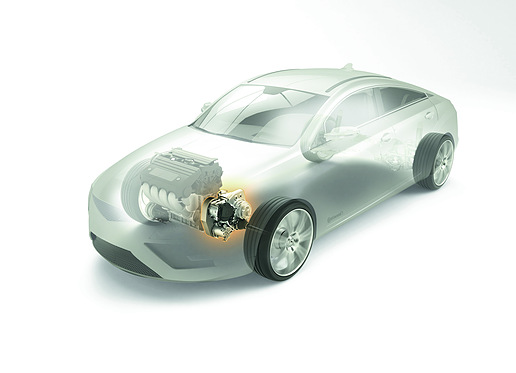 在大陸(Continental)的48V架構(gòu)中啟動(dòng)發(fā)電機(jī)將取代交流發(fā)電機(jī)